High-resilience flexible polyurethane foam, also known as “HR” foam (high resiliency foam). These foam products can be cold-cured, with a simple processing technique and excellent physical properties. The product features high elasticity and a high load ratio, together with a latex-like feel. Used for seat cushions, it feels soft and comfortable at first touch, yet provides firm and resilient support when further compressed — an ideal padding material widely used in the automotive and furniture industries.
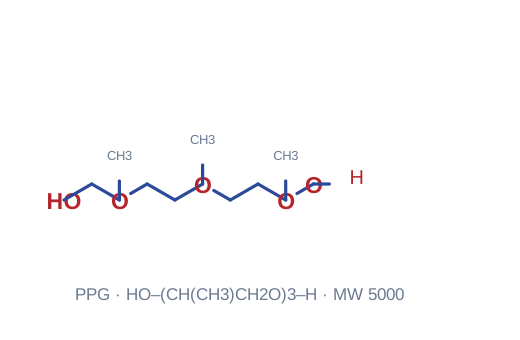
The polyether polyols used for high-resilience foam are mainly initiated with glycerin, using propylene oxide as the long-chain monomer — typically 5,000 and 6,000 molecular-weight polyethers. Bio-based polyether polyols that use vegetable oil instead of propylene oxide as the long-chain monomer are also available.
| Model | Hydroxyl value (mgKOH/g) | Acid value (mgKOH/g) | Moisture % | PH | Color APHA | Appearance | Viscosity mPa·s / 25°C | K/Na ppm |
|---|---|---|---|---|---|---|---|---|
| 5,000 MW polyether | 32-36 | ≤0.1 | ≤0.1 | 5.0-7.0 | ≤100 | Colorless transparent liquid | 750-950 | ≤6 |
| 6,000 MW polyether | 26-30 | ≤0.1 | ≤0.1 | 5.0-7.0 | ≤100 | Colorless transparent liquid | 900-1100 | ≤6 |
To increase foam hardness, the formulation may require polymer polyols — high-activity polyether polyols with 24% and 40% solids content based on a 5,000 MW polyether backbone.
The isocyanates used for HR foam are mainly TDI, modified MDI, TDI/MDI blends, or TDI/MDI/modified-MDI blends.
Two main classes of blowing agents are used for HR foam: water and low-boiling-point compounds.
A special class of surfactants containing hydrophobic and hydrophilic segments or groups. Cell openers lower the surface tension of the foam and promote cell rupture, raising the open-cell content and eliminating shrinkage caused by closed cells in flexible, semi-rigid and rigid foam products.
In the production of HR foam, the foam stabilizer (silicone surfactant) is an indispensable key auxiliary.
By chemical structure, polyurethane catalysts fall into two basic classes: tertiary amine catalysts and organometallic compounds (including carboxylates and alkyl compounds).
Polyurethane takes dye well. By adding dye or pigment color paste, polyurethane foam — flexible foam in particular — can be produced in bright, vivid colors.
Polyurethane foam adheres well to many materials, so during molding a release agent must be applied to the mold surface, forming a very thin barrier layer between the foam skin and the mold for easy demolding.
